


Auto Accident & Whiplash Treatment in Vancouver, WA
You may feel fine now—but your body might tell a different story in a few days.
Even minor accidents can create hidden stress in your body—especially in your neck and spine.
Many people feel “fine” at first… until pain, stiffness, or headaches show up days later.
No pressure. No sales pitch.
Just clear guidance so you can make the right decision for your body.
Real Stories. Real Recoveries.
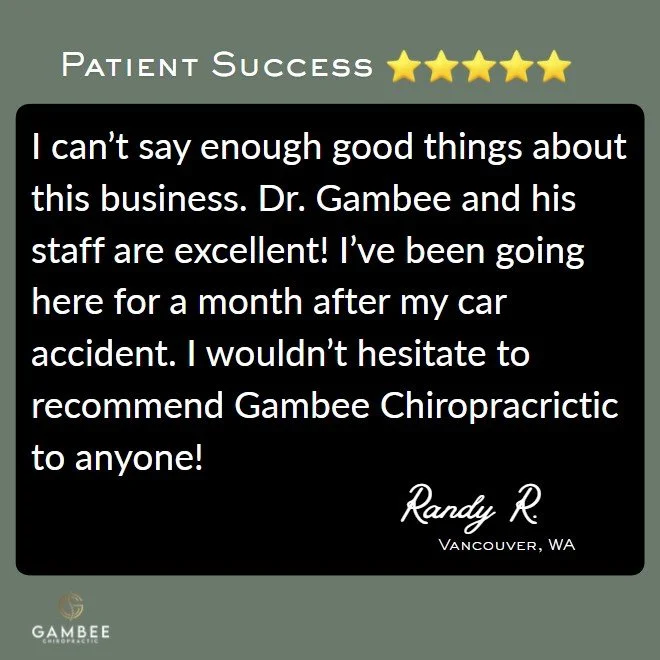
Even a minor accident can create injuries that don't fully reveal themselves for days—or even weeks. Getting evaluated early can help prevent small problems from becoming long-term ones.

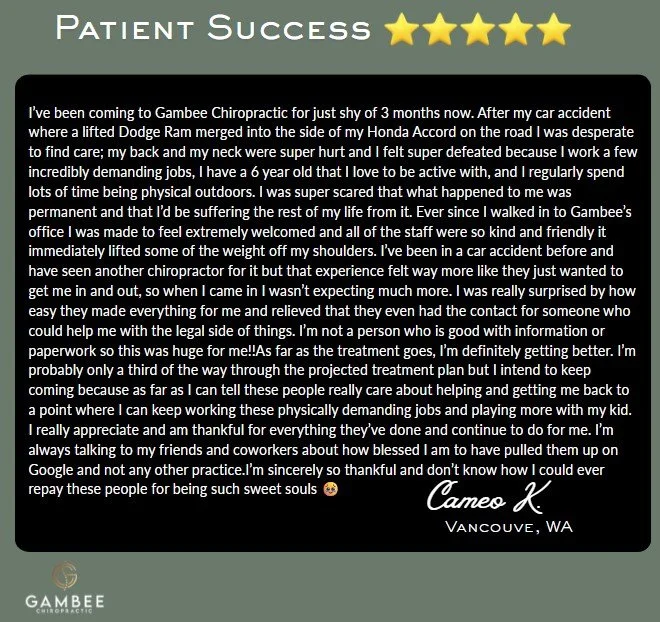
Our goal is to restore proper movement, reduce nerve interference, and help your body recover the way it was designed to—so today's accident doesn't become tomorrow's chronic pain.
Why feeling “OK” right now can be misleading…

After an accident, it’s common to feel shaken but relatively fine — especially if the damage to the car looks minor or the pain fades quickly.
What most people aren’t told is this:
Even low-speed rear-end collisions can place significant force on the joints, discs, and ligaments of the neck and spine. Pain is often delayed, and symptoms may come and go before becoming chronic months or even years later.
In my practice, one of the most common things people say when dealing with chronic neck or back pain is:
“I was in a small accident years ago… but it didn’t seem that bad at the time.”
This page exists to help you avoid that outcome — by understanding what’s happening before decisions are rushed.
You don’t need to decide anything today.

What Actually Happens to the Spine in a Collision
When a car is struck from behind, the body doesn’t move as a single unit.
The torso is pushed forward by the seat, while the head momentarily lags behind — causing the neck to move backward and then forward in rapid succession. This happens in fractions of a second.
This rapid, multi-directional movement places stress on the ligaments and discs of the cervical spine — tissues designed for stability, not sudden acceleration and deceleration.
This happens in fractions of a second.
Even at low speeds, this motion can create:
Micro-tears in soft tissue
Joint irritation
Altered movement patterns
Delayed inflammation
Because adrenaline is high and damage is often subtle, symptoms may not fully show up right away. Pain can improve quickly… then return weeks, months, or even years later if the tissues don’t heal properly.
This is why accidents that seem “minor” at the time are so often linked to chronic neck and back pain down the road.
What to Do…
Give yourself time before making decisions. Healing and clarity don’t happen on an insurance adjuster’s timeline.
Get evaluated, even if symptoms feel mild or seem to be improving Early assessment helps ensure injuries heal properly — not just quickly.
Move normally and gently, as long as you’re not pushing into pain Light movement supports healing. Forcing through pain does not.
Pay attention to changes over the first several days
Stiffness, headaches, fatigue, or discomfort that comes and goes all matter.Document what you’re feeling, even if it seems minor
Small details early can be important later — medically and legally.

What NOT to Do…
Don’t assume no pain means no injury
Many soft-tissue injuries are delayed or masked by adrenaline.Don’t rush into settlements or paperwork
Accepting money or signing documents can limit options before the full picture is clear.Don’t ignore symptoms because life is busy
Minor issues left unaddressed often become chronic problems later.Don’t let anyone pressure you to “wait it out”
Waiting without guidance isn’t the same as allowing the body to heal properly.
A Helpful Reminder…
Healing isn’t about overreacting —it’s about responding wisely, early, and with good information.
Know Where You Stand Before Anything Else
Before getting pulled into insurance, paperwork, or outside opinions, the most important step is understanding how your body is actually responding to the accident.
We’ll show you exactly what’s going on — and what to do next.
No pressure. Just clear answers.
Common Questions after a Car Accident
In the days and weeks after an accident, it’s normal to feel unsure about what matters — medically, legally, and practically.
These are the questions people ask most often when they’re trying to make sense of what to do next.
Some people want to understand the legal and insurance side first…

After an accident, it’s normal to feel unsure about what to do next — medically, legally, and practically.
If you want a clear, step-by-step breakdown of what to do (and what to avoid), I recommend:
Visit AfterAccident.com

Need Local Help Navigating This?
If you’re in the Vancouver area and want to understand what’s actually happening in your body after an accident — and what to do next — we can help.
Our focus is simple: help your body heal correctly and get you back to where you were before the accident - not just temporarily relieve pain.
No pressure. No Rush.
Just honest answers, clear direction, and care that respects how your body actually heals.